Rize and Memtime are the two most serious automatic time trackers on the market right now. Both run silently in the background, log every app and browser tab you touch, and eliminate the manual timer problem entirely. According to the American Bar Association's 2022 Legal Technology Survey Report, professionals who rely on manual time entry lose an average of 10-15% of their billable hours to memory gaps and rounding errors — exactly the problem both tools set out to solve.
The difference is scope: Memtime is focused purely on automatic time capture, while Rize layers AI categorization, productivity tools, team reporting, and built-in invoicing on top of the same capture foundation.
Quick Answer
Choose Rize if you want fully automatic time tracking with AI categorization, team profitability dashboards, and built-in invoicing. Choose Memtime if your environment requires fully offline data storage and you need Linux, Citrix, or 100+ native integrations with legal billing, ERP, and accounting tools.
Rize vs. Memtime at a Glance
| Feature | Rize | Memtime |
|---|---|---|
| Automatic time capture | Captures and files entries automatically via AI | Captures automatically, but you assign entries by hand |
| Ease of use | Fully hands-off once configured | Simple interface, but requires a daily review session |
| Team features | Real-time utilization, profitability dashboards, invoicing | Personal reports only; no team visibility |
| Productivity tools | Focus scoring, distraction blocker, AI day planning, focus music | None |
| Privacy | Cloud-stored; employees control sharing, no keystrokes or screenshots | Fully offline; data never leaves the device |
| Platforms | Mac and Windows | Mac, Windows, Linux, Windows Server, Citrix |
| Integrations | 7 native (ClickUp, Linear are two-way) + Zapier | 100+ native connectors including legal billing, ERP, accounting |
| Pricing (annual) | From $9.99/mo solo ($23.99 with integrations); $149.95/mo for 5-person team | From $21/mo solo (integrations tier); no monthly billing |
Both Are Easy to Use, but Rize Needs Less From You
Both Rize and Memtime have dedicated Mac and Windows apps. Memtime also has a Linux app. Neither has a mobile app. Memtime is simpler in raw feature count, but Rize keeps its deeper feature set out of your way with a menu bar that shows running time, total hours, and quick controls for meetings, breaks, and focus sessions.
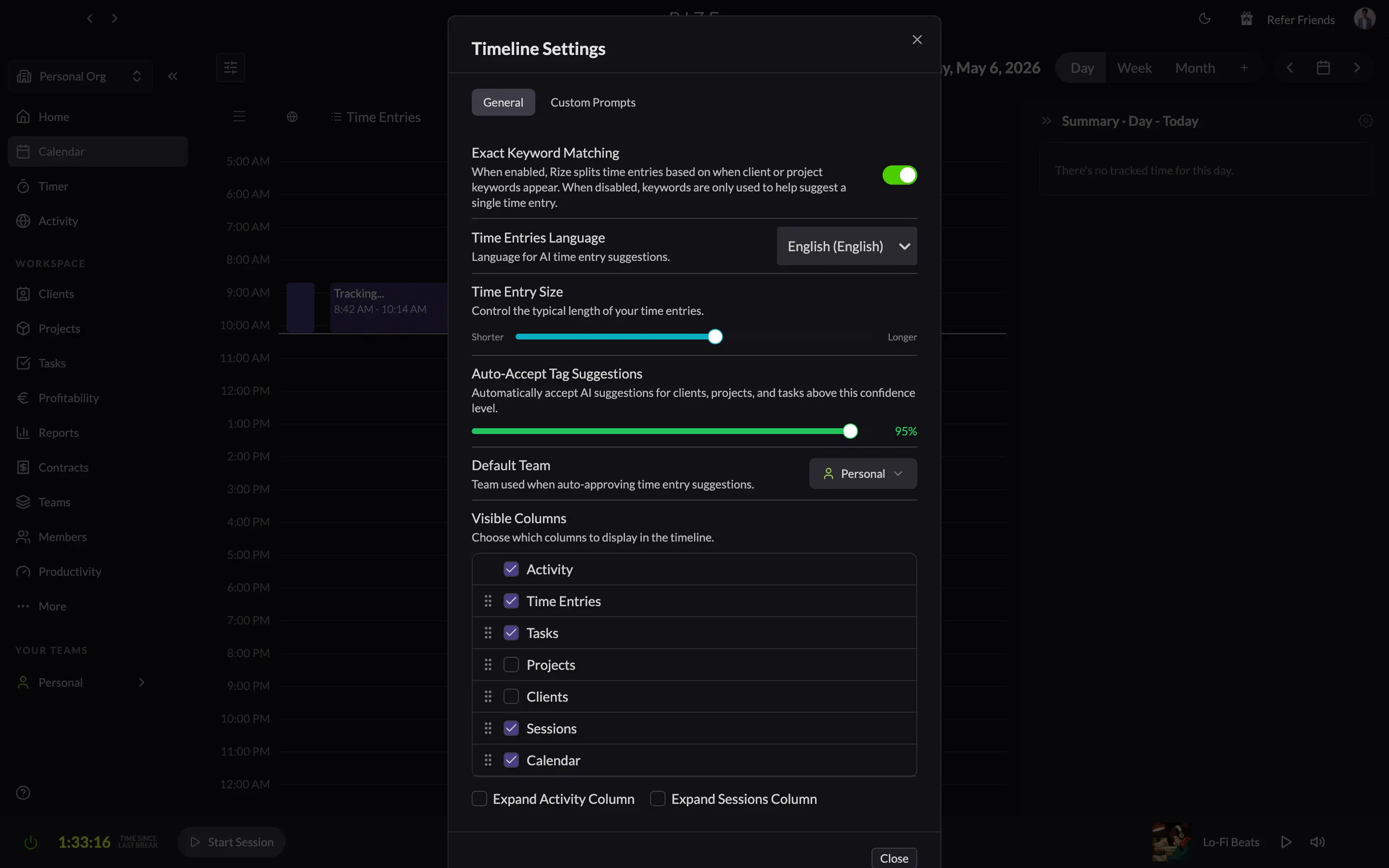
The real ease-of-use difference is what happens after tracking. Rize is fully hands-off. The keyword matching feature scans your activity timeline for client or project keywords and automatically splits and assigns time entries the moment they appear. You set the keywords once and never touch them again.
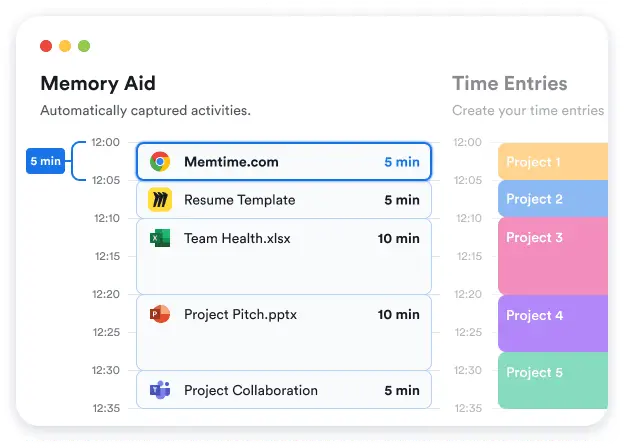
Memtime tracks everything too, but converting tracked activity into an actual time entry is manual. Every session in the Memory Aid timeline has to be dragged and assigned to a client or project by hand.
If easy-to-use means a tracker that runs in the background and handles everything, Rize wins. If you want full control over what gets logged and what doesn't, Memtime's manual approach is a feature, not a flaw.
Memtime Auto-Tracks. Rize Auto-Tracks and Auto-Thinks
The capture part is equal. Both tools run silently and log every app, browser tab, document, and email as you switch between them. Neither needs timers. The difference is what happens next.
In Memtime, captured activity stays captured. Converting it into a time entry is your job. You drag a session from the Memory Aid, assign it to a project, and save it. The resulting entry shows the duration and the project. No description, no AI, no context.
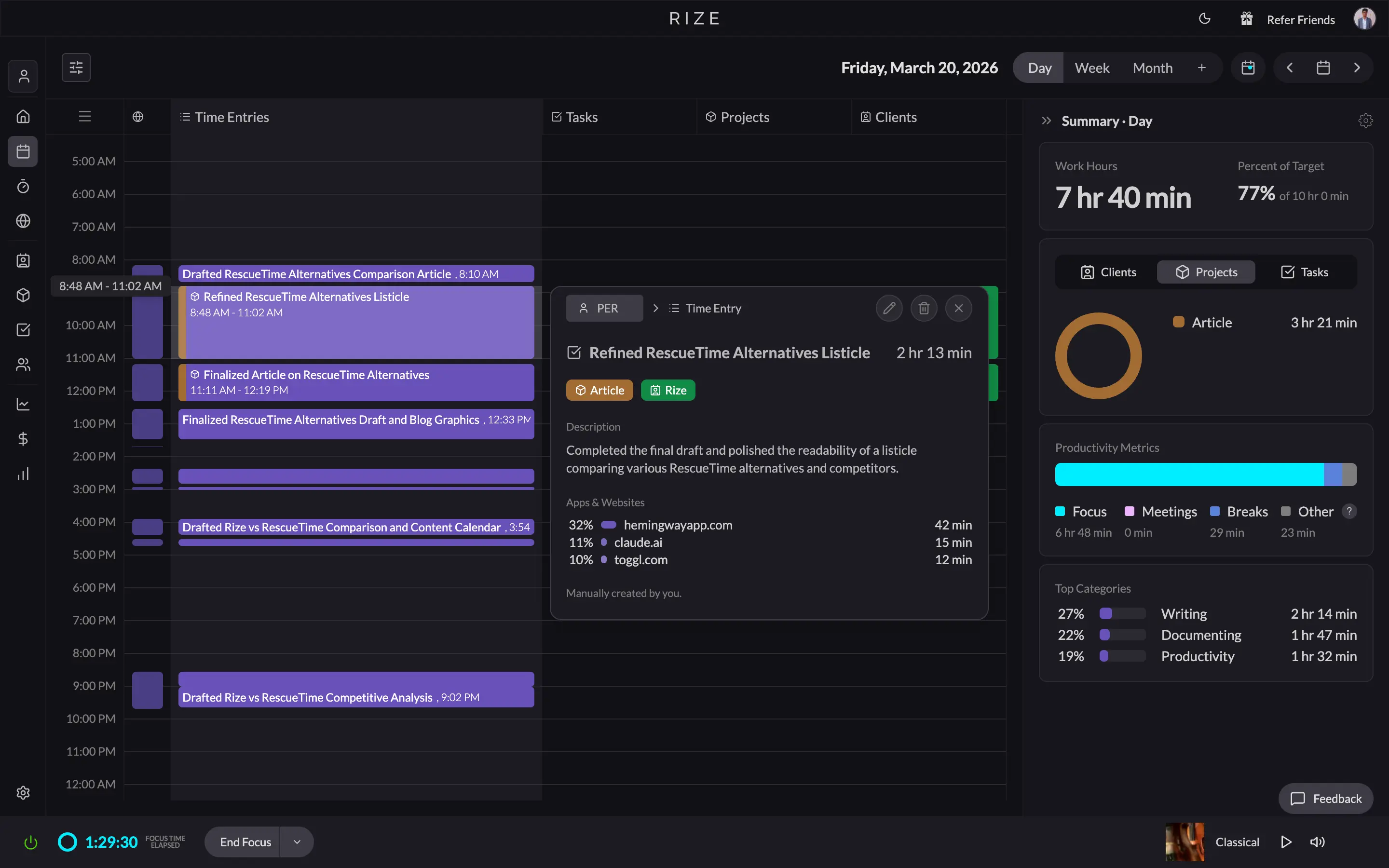
Rize goes further. When it captures your activity, its AI groups it into a time entry, writes a description, suggests a project, and flags whether it should be billable. You can set a confidence threshold, and anything above it gets auto-accepted without review. The keyword matching feature makes it genuinely hands-off over time: once you tell Rize that any activity containing a client name belongs to that client, every future matching session gets tagged and assigned automatically.
Rize's AI gets better the more you correct it. Within a few days, suggestions land at the right client and project almost every time, with descriptions detailed enough to paste directly into an invoice note. Memtime's manual entries are slower and more basic — no AI-generated context, no description, no confidence scoring.
See the difference
Try Rize free for 7 days and compare your auto-generated time entries against what you'd log manually. No credit card required.
Start Free TrialRize Has a Team Layer. Memtime Keeps Everything on Each Device
This is the biggest structural difference and, for agency leads or team managers, often the deciding one. According to a 2023 Hubstaff survey of agency owners, teams that use automatic time tracking report recovering up to 20% more billable hours compared to manual entry. Memtime's privacy design means all activity data stays on each person's machine. Nobody else can see it. There is no team dashboard inside Memtime at any price tier.
A manager can't open Memtime and see which clients are consuming the most hours, whether someone is over-serviced on a retainer, or what the team's billable split looks like this week. The only team visibility Memtime provides is what team members manually convert into time entries and sync to an external project management tool.
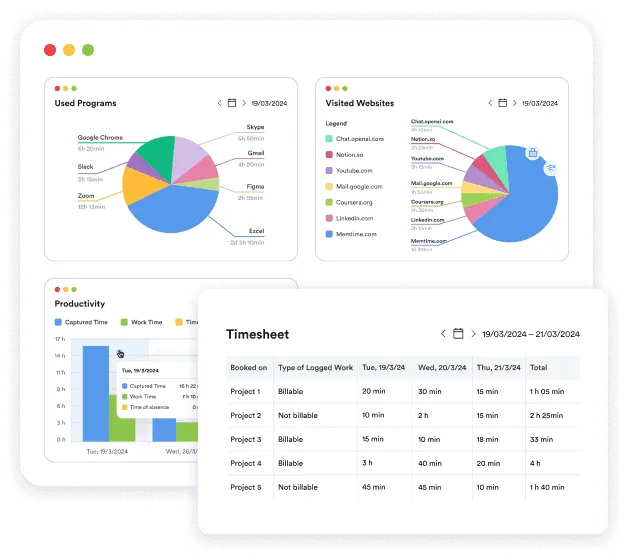
The reports Memtime generates are useful at the individual level: a timeline view, a project breakdown, and a tracked-vs-entered comparison. But they're personal reports, not team reports. No utilization dashboard, no margin view, no profitability by client.
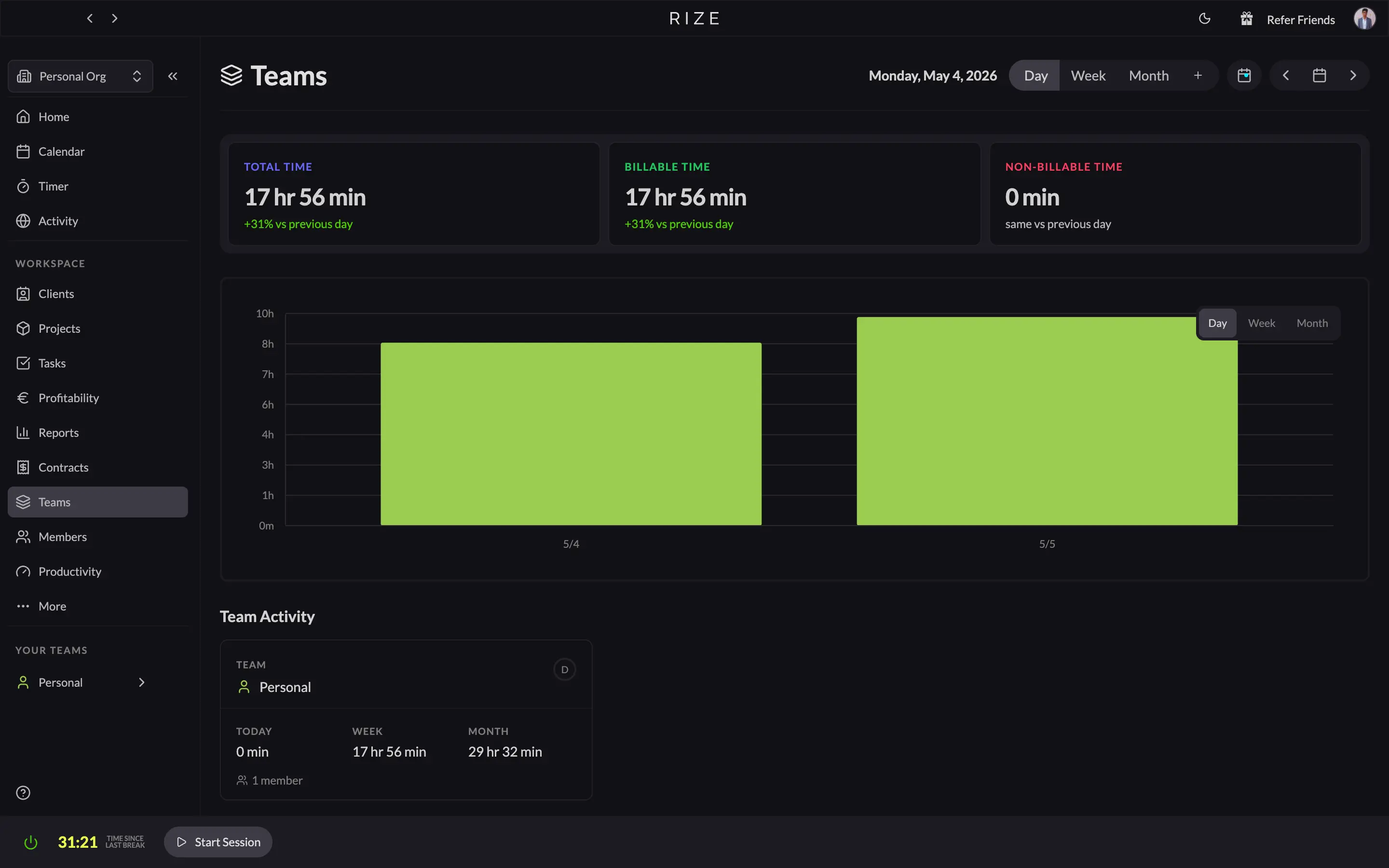
Rize is built differently. The Teams dashboard shows total time, billable time, and non-billable time across your whole team in real time, without anyone submitting a timesheet. The client view shows revenue, cost, and margin per client. The Profitability view tracks contracts against actual hours with a trend chart showing whether margins are moving in the right direction month over month.
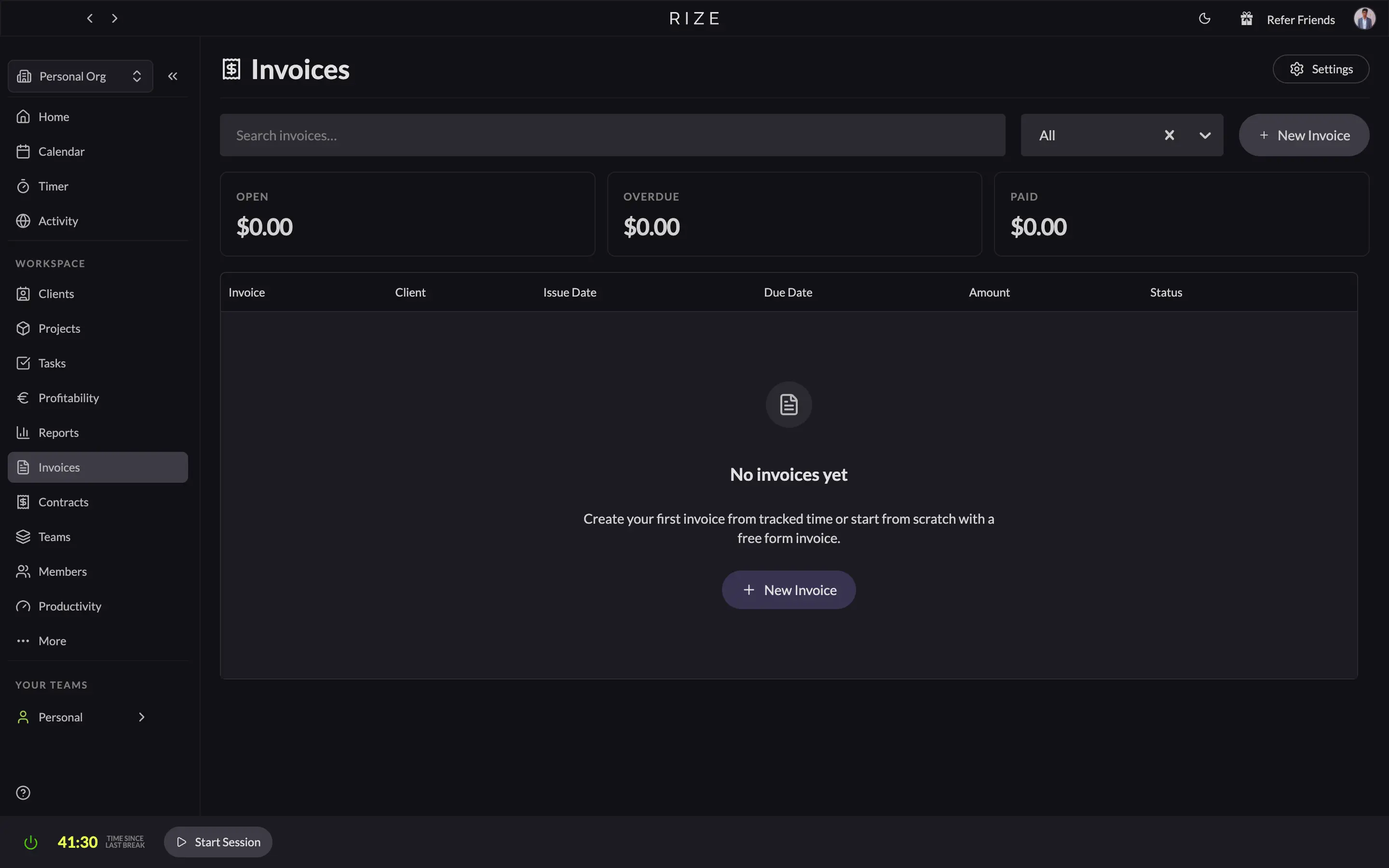
Rize has invoicing built in. You generate an invoice directly from tracked time without exporting to another tool first, send it as a PDF, and record payments against it. Memtime has no invoicing at any tier.
If you manage a team and need to know whether a client is profitable this quarter, Rize is the answer. Memtime won't give you that.
Rize Has a Full Productivity Layer. Memtime Is Only a Time Tracker
Memtime has no productivity features. No focus timer, no break reminders, no distraction blocker, no focus music. If your goal is to understand and improve how you work, not just log it, Memtime gives you nothing to work with.
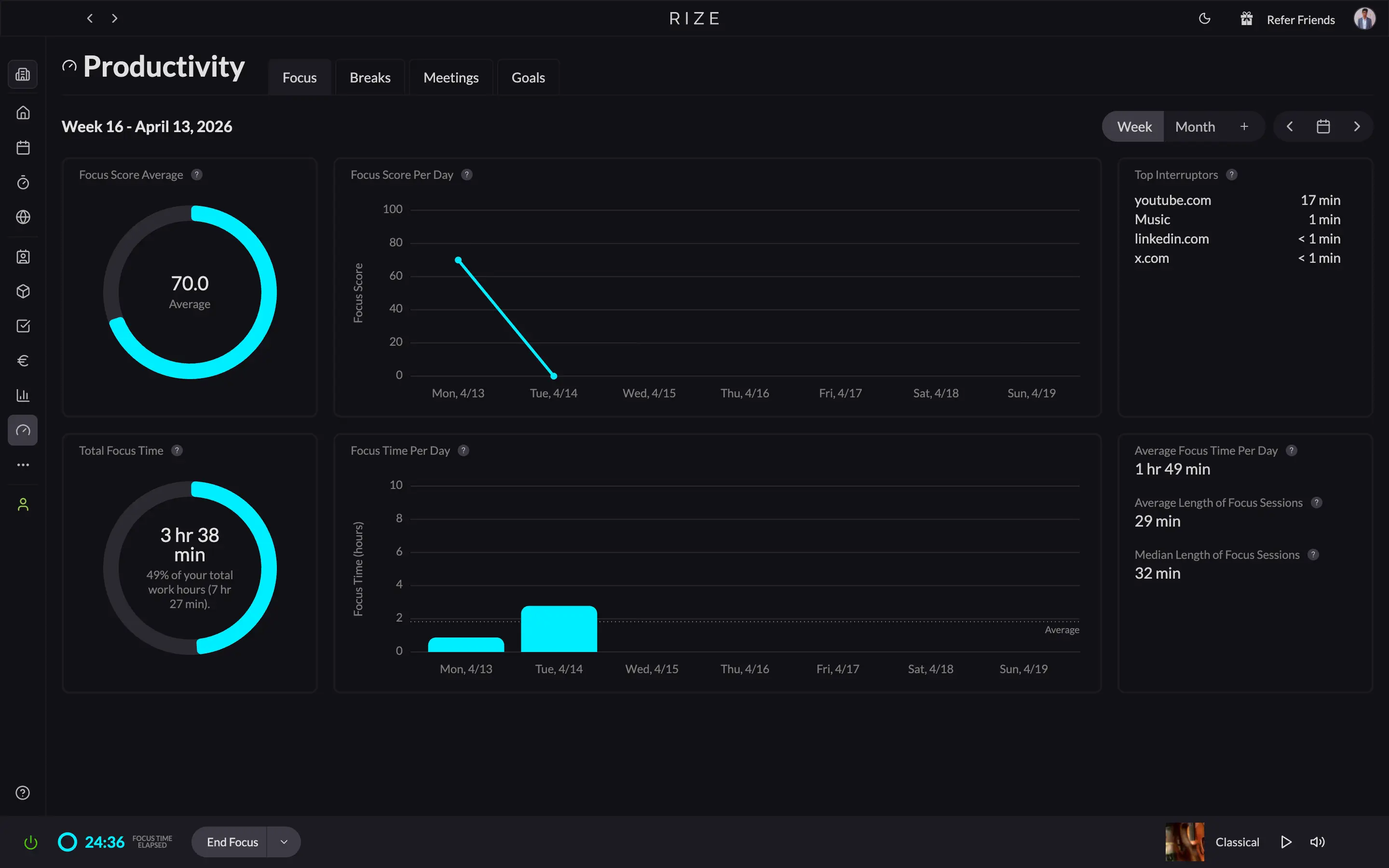
Rize treats productivity as a first-class feature. The Productivity dashboard gives you a Focus Quality Score out of 100, calculated from over 20 factors about how you actually worked. You get a Focus Score Per Day chart, a breakdown of your top interruptors, and a total focus time figure.
Automatic Focus Detection starts your focus session the moment it detects focused activity. When you drift during a focus session, the Distraction Blocker fires. With Urge Surfing enabled, you can't close it for 10 seconds — just enough friction to make you aware of what you're doing.
The Planning feature uses AI to schedule your next day's focus sessions and breaks overnight, pulling from your calendar. You wake up with a structured day already laid out. There's also a built-in focus music library and a session timer for Pomodoro-style blocks. If you want a time tracker that also helps you actually focus, Rize is the only one that does both.
Memtime Is Fully Offline. Rize Stores Data in the Cloud
Memtime's activity data never leaves your device. The app records everything locally. The only information that touches Memtime's servers is your login credentials (email, hashed password, user ID) and, if you use integrations, encrypted tokens needed to sync with external tools. Memtime employees can't access those tokens.
Rize stores activity data in the cloud. But Rize captures only metadata: app name, URL when applicable, and window title. No keystrokes. No screenshots. No content inside your apps.
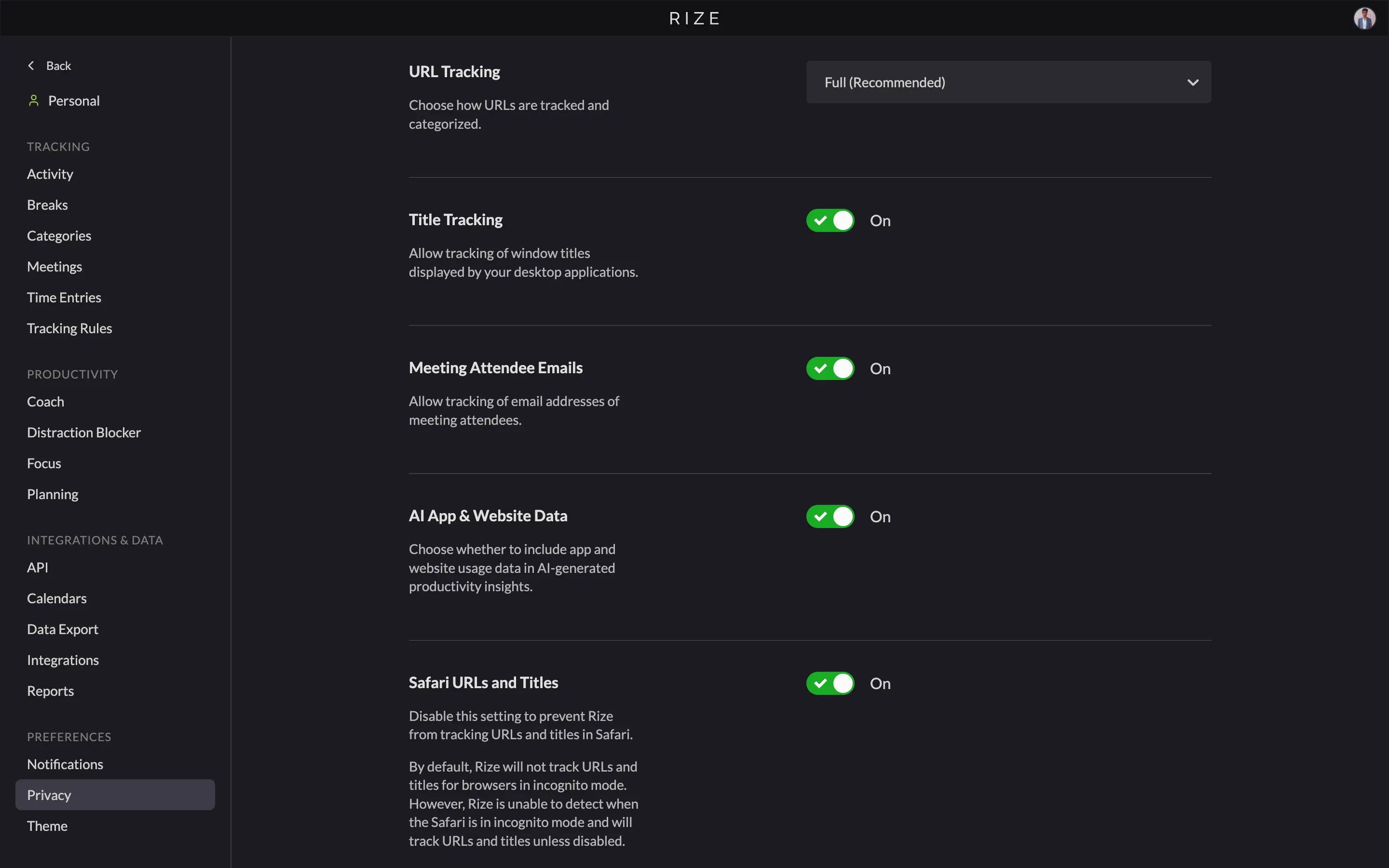
Rize's privacy settings give users real control. You can dial back URL tracking, disable title tracking, exclude specific apps or websites, set up scheduled auto-redact, or permanently delete all past tracked data with one click.
For team workspaces, admins only see approved time entries and reports. They cannot access raw activity, window titles, or anything a team member hasn't approved. Rize doesn't sell user data or use identifiable customer data to train third-party models.
If activity data can never touch a server under any circumstances, Memtime is the only answer. If cloud storage is acceptable as long as employees control what gets shared and there's no surveillance-style capture, Rize's privacy model is solid.
Memtime Connects to More Tools. Rize Makes Fewer Connections Smarter
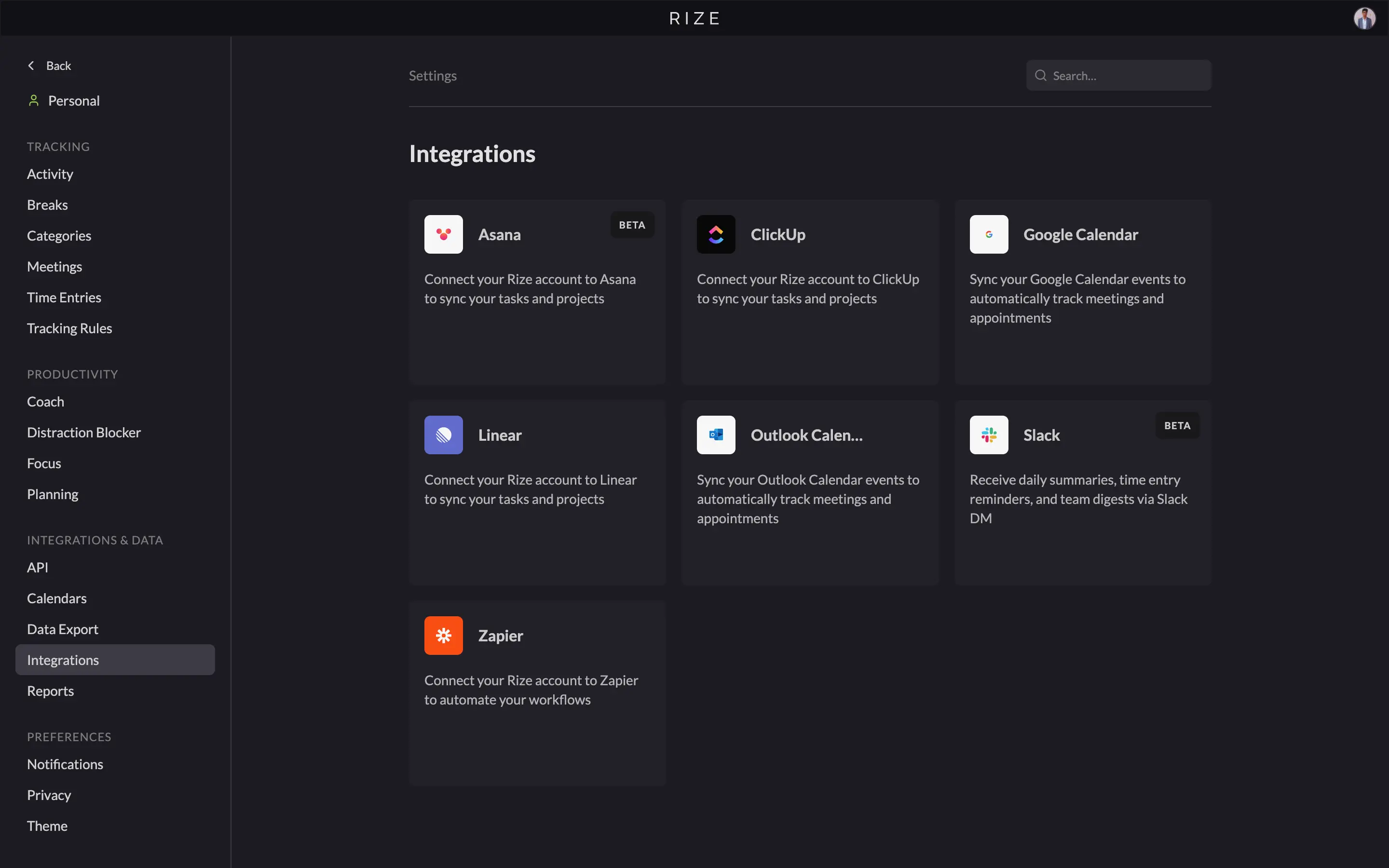
Rize has seven native integrations: ClickUp, Linear, Google Calendar, Outlook Calendar, Slack, Asana, and Zapier. The ClickUp and Linear integrations are genuinely two-way — Rize imports your tasks, auto-tags your tracked time against them using AI, and pushes the completed entries back without you touching anything.
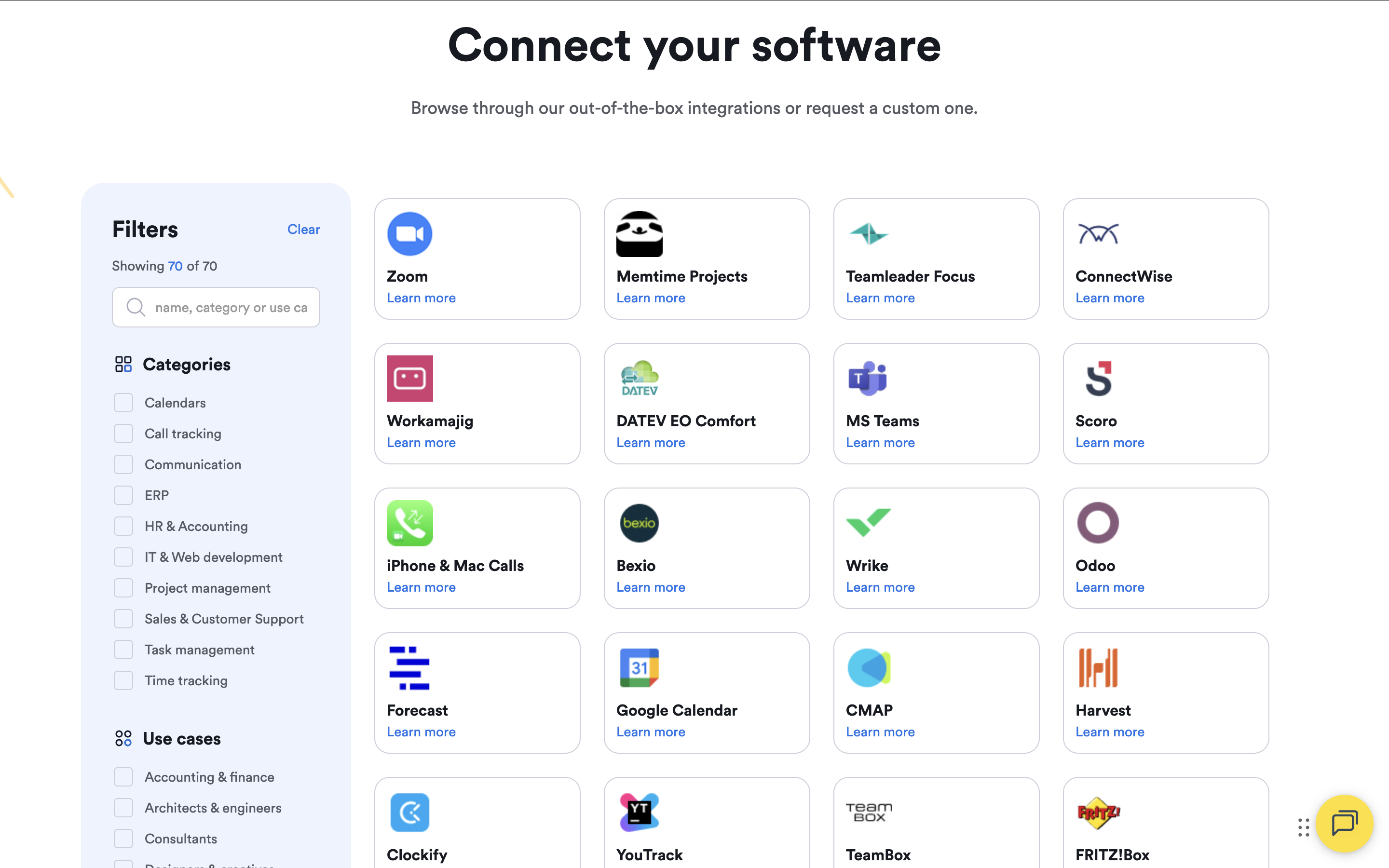
Memtime has 50+ native integrations, and the breadth is the point. Where Rize covers project management, Memtime covers project management plus accounting (QuickBooks, FreshBooks, Xero, Zoho Books), legal billing (Clio, Lawcus), IT service management (Jira, Datto Autotask, Azure DevOps), ERP systems (Odoo, Weclapp), and calendar apps across every platform including CalDAV and iCloud.
One thing to understand about how Memtime's integrations actually work: they sync time entries you've manually created in the Memory Aid, never the raw automatically captured activity. The integration handles the export. The assignment is still yours.
Rize doesn't have that nuance because there's nothing to manually assign. The AI handles it, and the entry goes straight to ClickUp or Linear. Zapier can technically bridge Rize to anything, but native integrations don't break, don't require Zap-building, and don't cost extra.
Rize vs. Memtime: Pricing Comparison
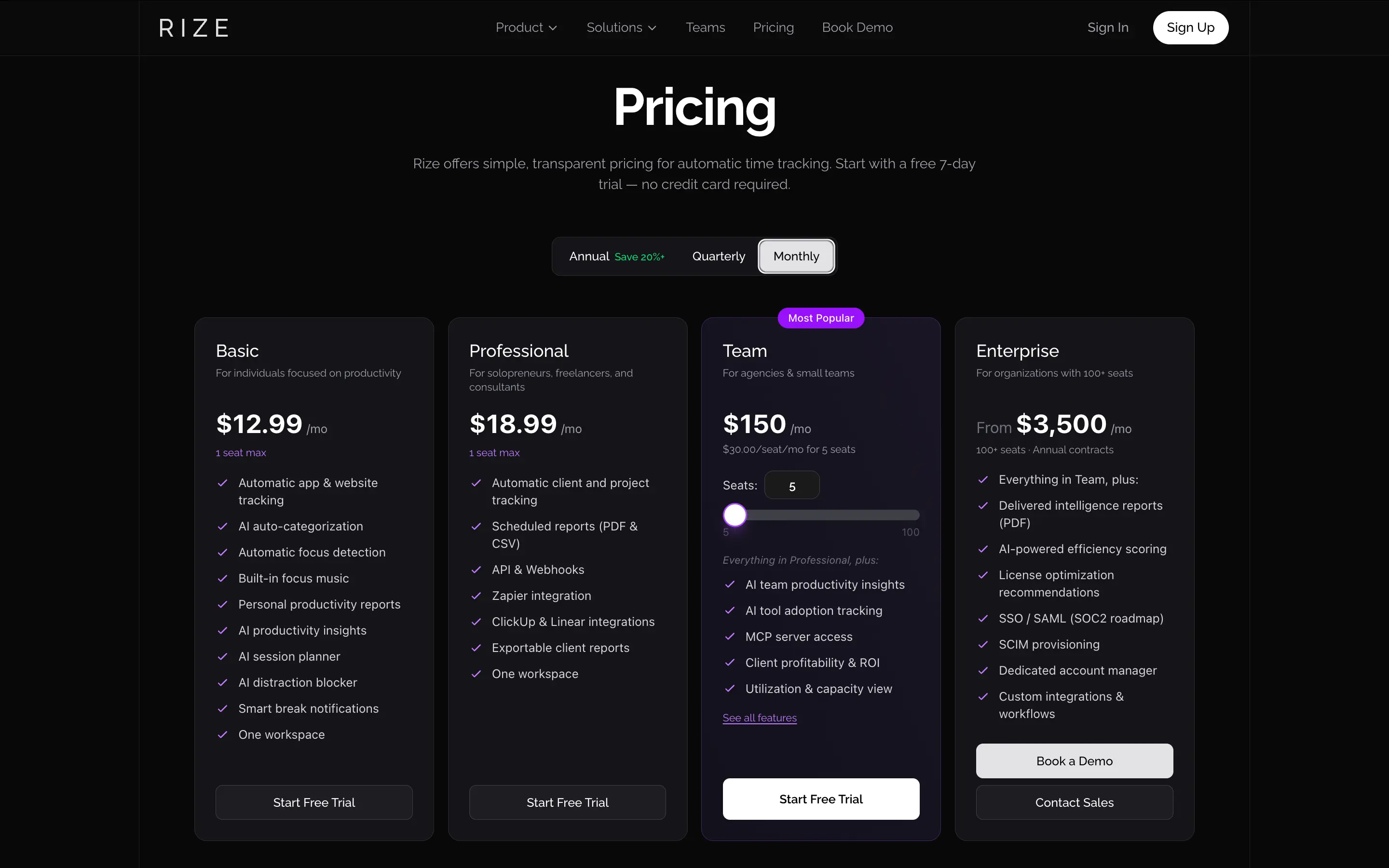
Memtime doesn't offer monthly billing. All prices below are annual. Prices as of August 2026:
| Plan | Rize | Memtime |
|---|---|---|
| Entry | $9.99/mo Basic | $14/user/mo Basic |
| With integrations | $23.99/mo Pro | $21/user/mo Connect |
| Premium | $149.95/mo Team (5 seats) | $29/user/mo Premium (SSO, SAML/SCIM) |
| Enterprise | Custom | Custom (50+ seats) |
| Free trial | 7 days, no credit card | 14 days, no credit card |
| Team dashboards | Included in Team tier | Not available at any tier |
| Invoicing | Built in | Not available at any tier |
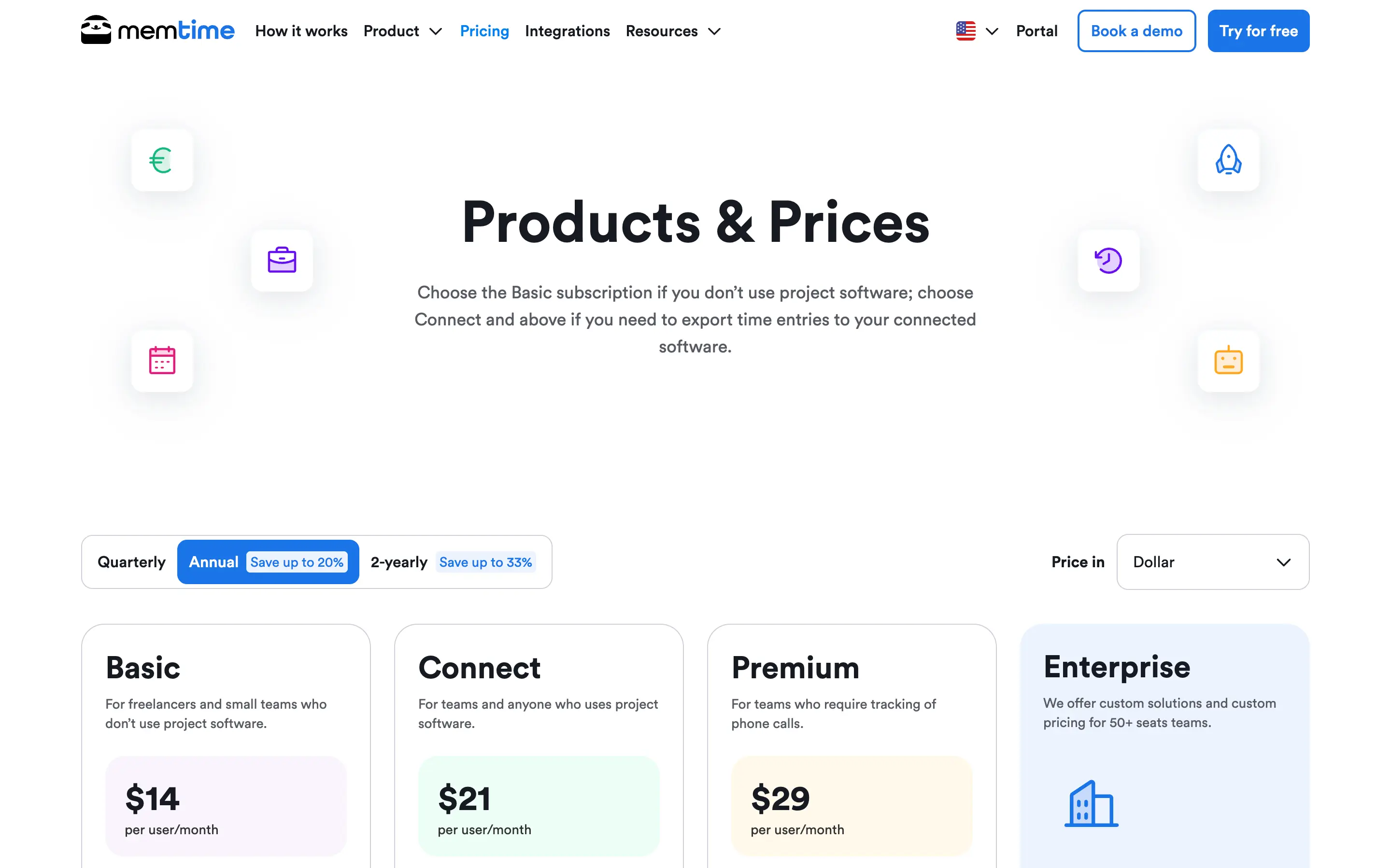
For a solo user who needs client and project tracking with integrations, Rize Pro at $23.99 costs about $3 more per month than Memtime Connect at $21. Both include ClickUp and Linear at those tiers. What Rize's $3 buys is the AI layer — entries that assign, describe, and file themselves instead of a daily drag-and-assign session. Memtime's breadth of 100+ native integrations is its own reason to pick it.
For a five-person team, Rize Team comes to $149.95/mo (annual) and Memtime Connect to $105/mo. The gap is about $45 a month. Memtime at any price has no profitability dashboard, no utilization view, no team reports, and no invoicing. For an agency lead who needs billing visibility alongside time data, Rize Team isn't the more expensive option — it's the only option that does the job.
Which Should You Use?
Choose Rize if:
- You manage a team and need profitability dashboards, utilization reports, or built-in invoicing
- You want tracking that's fully hands-off: AI assigns, describes, and files your time entries without a daily review
- You want a tool that improves how you work, not just logs it
- Cloud storage is acceptable as long as employees control what gets shared
Choose Memtime if:
- Your environment is data-sensitive (legal, IT, finance) and activity data cannot touch a server
- You need Linux, Windows Server, or Citrix compatibility
- You already run a tool — accounting, legal billing, ERP — that Rize doesn't connect to natively
- You want full manual control over every time entry before it gets logged
For most agencies and consultancies, Rize is the stronger choice. According to Harvard Business Review, inaccurate timesheets cost the U.S. economy an estimated $7.4 billion per day in lost productivity — a problem that automatic tracking directly addresses. Memtime tracks your time. Rize tracks it, organizes it, explains it, and tells you whether your clients are actually profitable.
Related Comparisons
See how Rize compares to other time trackers: Rize vs Timely, Rize vs Toggl, Rize vs Harvest, and Rize vs Clockify. For a broader view, check the full automatic time tracking software comparison or see how Rize works for agency teams.
Start tracking time automatically
Join thousands of professionals who stopped guessing where their time goes. Free for 7 days.
“Rize has been a no-brainer for me.” — Ali Abdaal Read more →