Flat-fee accounting firms have a profitability measurement problem that hourly firms don't: the fee doesn't tell you anything about cost. A client paying $2,000/month is profitable only if the hours behind their work cost less than that — and most firms are guessing, because their time data comes from manual punch clocks that understate real hours. Here is the cost model, the formula, and the fix.
The Fixed-Fee Margin Problem
Client profitability for a flat-fee firm = (fee − fully-loaded delivery cost) ÷ fee. Delivery cost is actual hours per client multiplied by each person's loaded cost rate. Everything rides on "actual hours" being real.
Hourly firms get a margin signal for free — the bill is the measurement. Flat-fee and value-priced firms severed that link on purpose, and many severed the measurement with it. The result is the classic failure mode: the engagement quoted at 12 hours that actually took 24, discovered only when a partner does the math at renewal — if anyone does it at all.
Why Manual Timesheets Hide It
Most firms still running time data get it from Clockify, QuickBooks Time, or legacy TSheets — manual tools staff treat as payroll compliance chores. The hours that make a client unprofitable (the extra bookkeeping cleanup, the "quick tax question," the senior review nobody scheduled) are exactly the hours that never get entered.
Accounting-firm buyers tell us the same thing on calls: "$5 a seat for Clockify, and it manually sucks." The report understates cost, the fixed fee looks fine, and the firm reprices a year too late.
The Cost Model
1. Loaded cost rates. Each staff member gets a cost rate: (salary + benefits + employer taxes + allocated overhead) ÷ annual available hours. Offshore and remote-heavy teams — common in firms this size — need real rates per person, because the margin story lives in who did the work.
2. Actual hours by client and engagement. Not budgeted hours, not last year. Which engagements each week consumed real time, split by staff level.
3. Fee coverage. Compare delivery cost to the fixed fee per client per period. The output that matters is a ranked list: which clients are consuming cost faster than their fee, and by how much.
Setting It Up
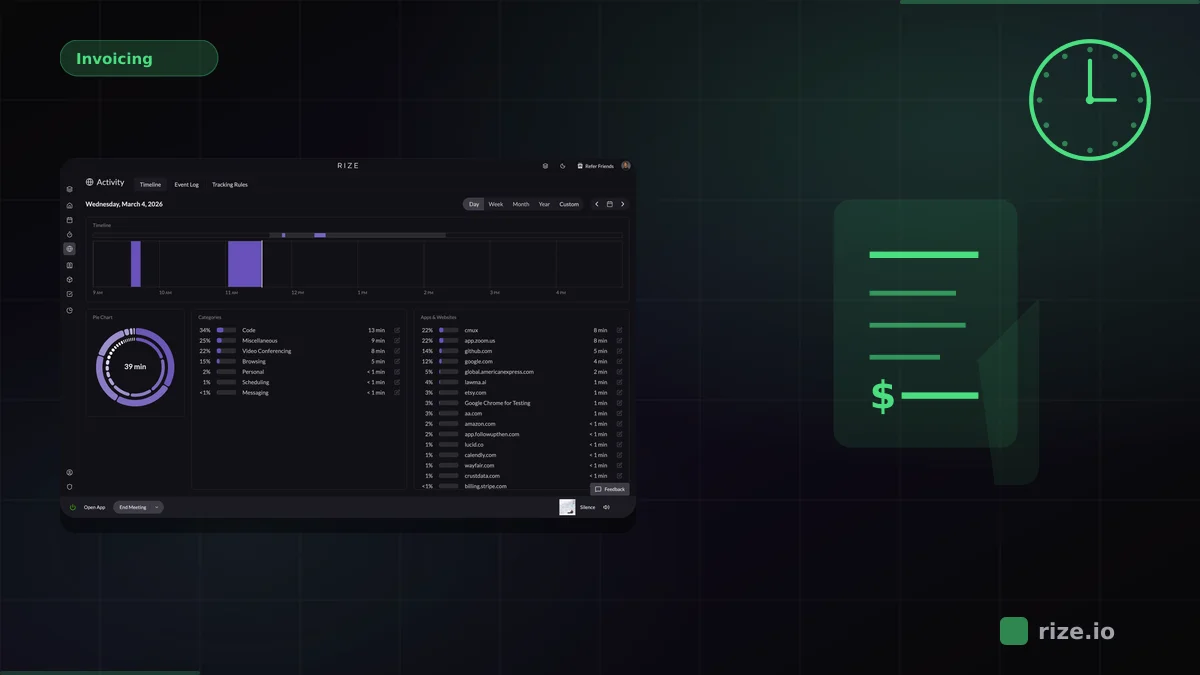
1. Capture hours without asking for them. Asking fixed-fee staff to run punch clocks fails culturally and mechanically. Automatic capture — Rize records work sessions in the background and categorizes them to client and engagement — delivers complete hours with zero behavior change.
2. Keep your billing system. Firms refuse to duplicate systems, and shouldn't have to. Rize feeds invoice-ready data to QuickBooks, Xero, FreshBooks, or your accounting stack via integrations and Zapier; the profitability view sits on top.
3. Review by client monthly, repricing quarterly. The firms doing this well run a quarterly pricing review against actual cost per client — the same cadence as the fee increases most firms already do annually, now with evidence.
The Common Failure Modes
Scope drift on tax clients. The 1040 becomes advisory calls all year. Department or service-line burn shows whether the fee covers the relationship or just the return.
Senior time on junior work. Partner cleanup on staff-prepared work. Cost-rate-based margin catches what hours-based views miss.
Seasonal averaging. A client profitable across the year can still be deeply unprofitable in March. Fixed fees paid monthly hide the spike; monthly cost reporting exposes it.
"Production-based" culture outrun by growth. Firms that scaled past ~50 staff report the same pattern: the partner's gut feel for which clients are profitable stops tracking reality somewhere around 30-40 engagements.
The firm's pricing is only as good as its cost data. If the profitability picture comes from a punch clock, it is wrong where it matters most. See how Rize works for accounting firms, or compare Rize to QuickBooks Time for fixed-fee work.